

They know where I live
Home is not where you're from

Like many ex-pat South Africans, I built a shrine to my former homeland – in my décor, on my bookshelf, in my larder. (Over-priced Eet Sum Mors and not-quite-right biltong.) I sprinkled the SA shrine with sulks about British summers and yearned for friends I’ve never replaced.
On my first trip back home, I cried when I stepped out of the plane and smelled the dusty highveld air. I felt wretched on the way out when I bumped into Nelson Mandela in the airport concourse and he encouraged me to return and help build a new South Africa.

Too late
It was too late for us; we’d given up hope of change and were building a life, albeit on foreign-feeling soil. Shortly after this encounter I started writing a novel set in southern Africa, Salt & Honey. Writing about the birds and the bush and the smells of my youth, was a comfort. And, let me be honest, an assuagement of guilt. But hang about, did I remember well enough or had the English sog dulled my senses?
I set off for the Kalahari, not my home, but that of my protagonist, a Ju|’hoan San/Bushman girl who would have lived in the north-east of Namibia. That was the start of many research trips to the region over the decades, and it was the genesis of a trilogy of novels – historical fictions set in southern Africa during the 1950s and 60s. Aside from the fascination of learning about a seminal indigenous culture unknown to me, the series was my way of keeping faith with the land I loved.
I can distinctly remember a trip back to Cape Town when I lost that faith.
It was at a traffic light (robot) when my car was swarmed by vendors desperate to sell wire sculptures, beaded proteas, drawings– not tacky stuff– artwork that showed talent. I despaired at how hopeless their situation was– the regime change that had promised them a better life, had let them down and always would. I learned that tender-hearted local motorists often took a circuitous route to avoid this intersection.
Eina! South Africa was still the morally compromising place it had always been for me, and I was done with calling it home.
Circling Manchester airport, the council playing fields below, bordered by orderly estates, looked like a blessing; I was glad to be paying my taxes into a system that provided for citizens’ basic needs.
There was still the problem of community. In the 35 years I’d lived in my English town, I’d never found my people—save for a few honourable exceptions. As soon as I retired, I knew I had to leave; I couldn’t die in Staffordshire. Could I go back and join those taking the long way home?
Husband wouldn’t hear of it. He’d never regarded South Africa as home. (He grew up there but is Greek, yearning for Ithaca as Odysseus did.) We compromised on one last adventure – Cornwall. And lo and behold, there my people were: in the chilly water of early morning swims, in the festivals and foodie markets, on the coastal path attached to dogs, in conversations in harbour cafés or paddling out to protest against sewage-dumping in the sea. When I walk in the woods and emerge into a cove of seaglass green water with granite rocks, I feel at home.
I have closed the last chapter of my African trilogy and am beginning a new Cornish novel. I am deeply grateful for all South Africa gave me and will always miss friends, but they know where I live.
This piece appeared in Issue 5 of The Collection*
The Collection is a monthly magazine for the curious and the creative — a field guide to the things worth paying attention to — science, nature, poetry, literature, architecture and in this particular issue, a fascinating aerial shot of the tip of Africa showing the mighty escarpment, with Cape Town hooking out into the oceans beyond. The magazine is beautifully published by Daleen Fouché.
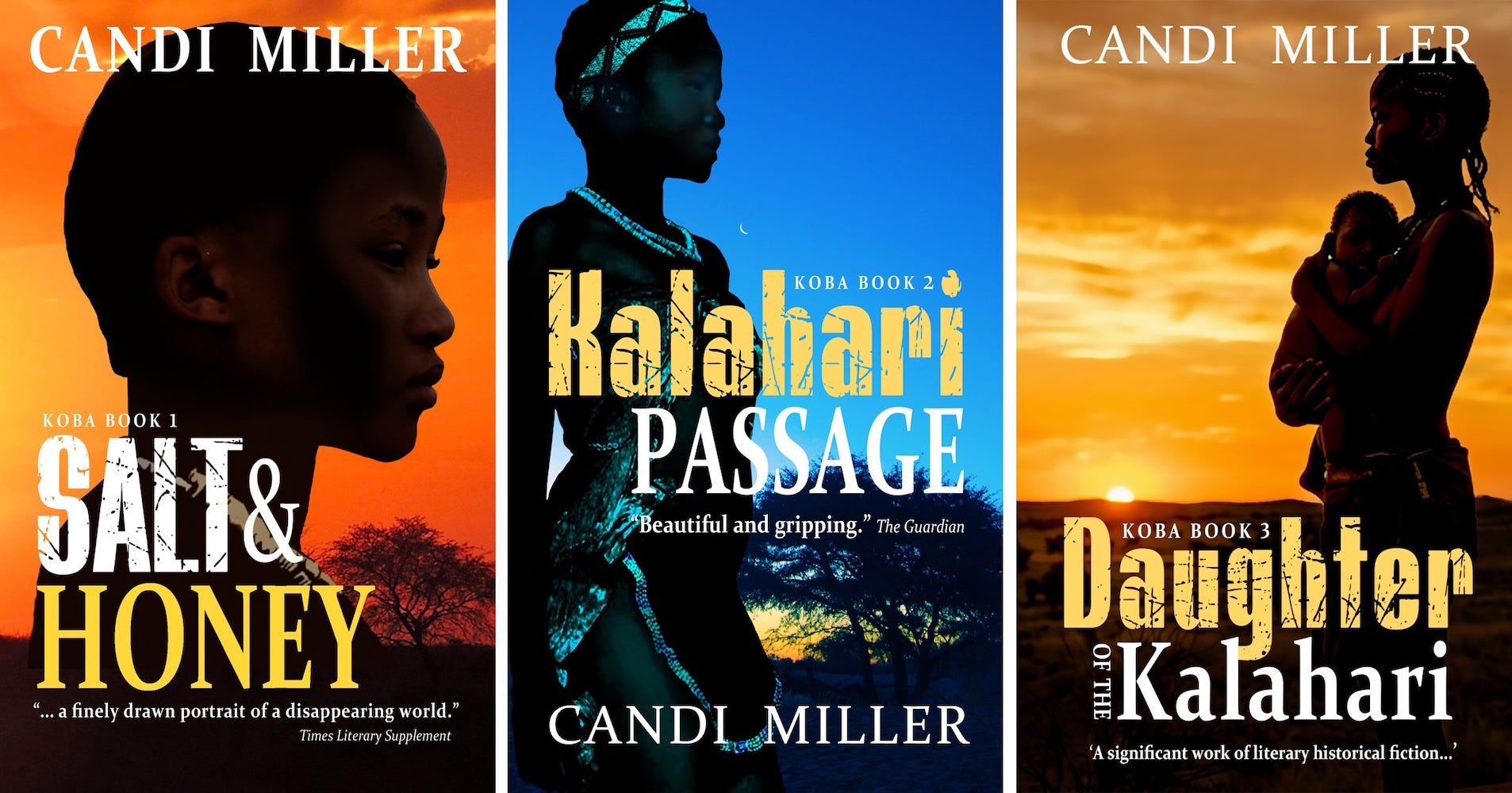
Find out about the Koba series here. Subscribe to enjoy the final instalment of this unforgettable saga. A gripping read and feel-good too — your purchase helps support the education of Ju|’hoan children in Namibia.
I'm so glad you found your people, Candi! Cornwall sounds lovely.
You raise a lot of questions about what is home and the diaspora experience.