

Working witches
and Publishing Hitches

The Grandgirls came to stay recently, parents in tow, but these were behind closed doors working remotely. Grandparents ruled.
Rain stopped outdoor play so I had a front row peek at the girls’ inner world as they entertained themselves. Their role play and creativity was dazzling. I was struck by how they mixed fantasy with reality. e.g. ‘Working Witches’ (a kid each end of the kitchen broom, two bags filled with ‘work stuff’ — my laptop, keyboard, phone and charger — slung between them.) They were off to do ‘witch work’. Spells on Zoom calls I eavesdropped on, open-mouthed. Oh, these daughters of a (wonder) working mother. Then there was ‘Memory Balloons’, a boisterous game involving balloon bashing and a golden rule:
Don’t let the balloon touch the ground or the memory inside it will burst and be lost —
An enviable idea for this once-wanted-to-be a picture book writer.
I saw no evidence to fuel the fear that under-10s can no longer engage in self-directed play due to the imagination-suffocating effect of screens. These two are allowed TV and screen-play, albeit restricted. Mind you, I heard the Firstborn, eight years-old and desperate for a phone of her own, wail to her mother:
-Why won’t your phone open?
-Because it doesn’t recognise you.
-Why doesn’t it recognise me?! I play with it all the time!
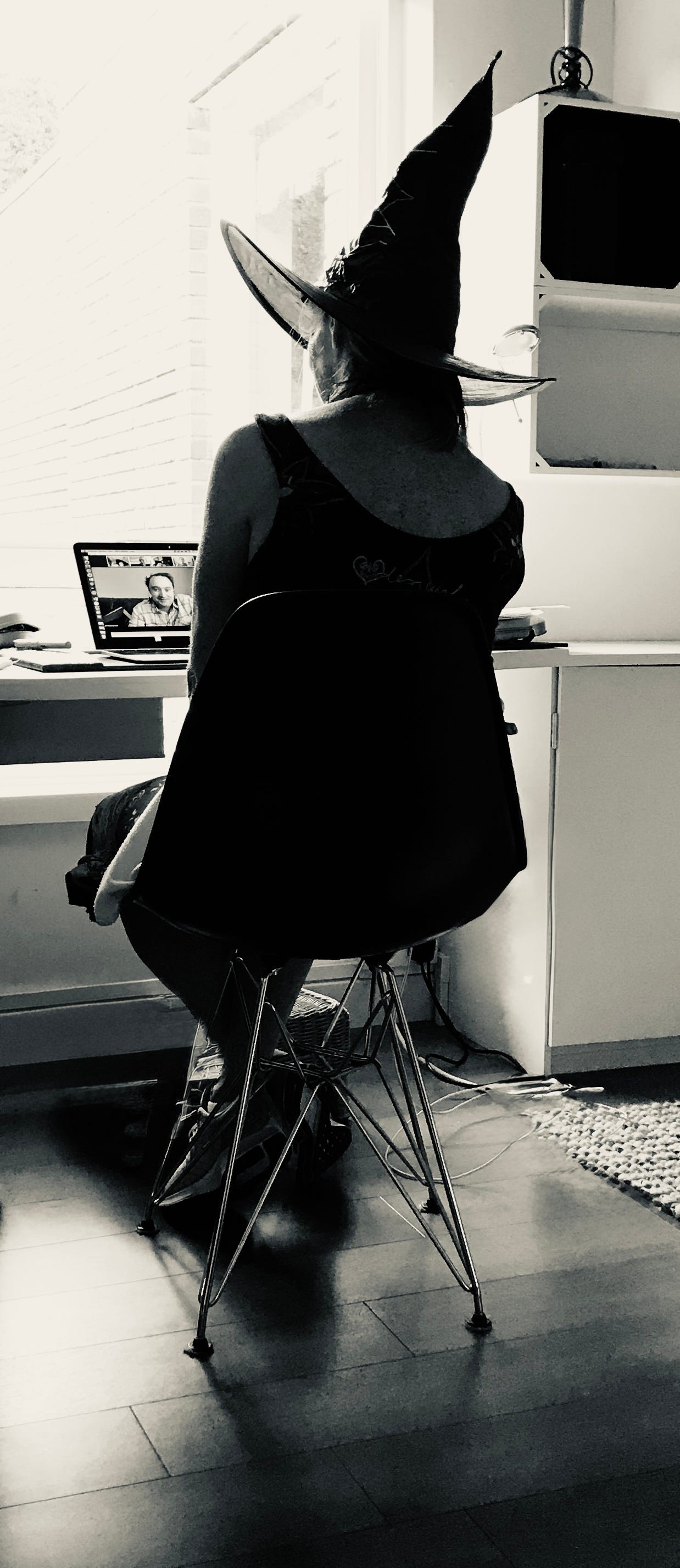
Wish us luck when our Working Witch works out Phone Settings.
Publishing Hitches
Even if you’re not connected directly to the publishing industry, you can’t help but have heard how tough things have become for authors. Publishers Weekly announced that 3.5 million books were published in the USA in 2025. Somewhere else I read it was 4 million and close to half of those were self-published, as mine are. A recent poll shows that Americans read, on average, zero books. Yup. ZERO! I don’t have stats for the UK, Canadian or Australian market but I’ expect they are only slightly less alarming. Tasmina Perry, in a Substack about the ‘Death of the Career Author’ wrote:
Things ARE different now.
Attention is fragmented.
Retail is unpredictable.
Reading competes with scrolling, streaming, gaming.
Publishers take fewer risks.
Editors feel safer commissioning celebrity books.
Algorithms drive discovery more than posters at train stations.
A single viral BookTok can outmuscle a year of curated marketing, yet no-one really understands how to make that viral magic happen.
This is 21st-century publishing.
“Books are being tossed into an overcrowded market where even brilliant ones vanish without a ripple”
(We Are All Creatives, Substack, 8 Dec 2025)
Eeek!
All of this is making me feel nervous, especially as I’m contemplating trying to sell my rights to the Koba books to a publisher. I’m not well-connected, resourced or expert enough to make these books visible to a wider audience — as they deserve to be, imho — for the sake of the untold story, and for the sake of the Kalahari kids they support.
Also, there’s the Old Mermaid, a new story pressing upon me now that I live beside the sea. I’d like to return to being a writer instead of a half-assed publisher.

I’m doing what I can in terms of self-publishing and marketing the Koba series, deep-diving to try and acquire better knowledge and skills. I’m also entering the books in a few competitions where eligible — a short-listing might aid discoverability.
Which brings me to my Koba 3 serialisation and you, dear paid subscriber.
I dare not publish any more chapters here in case this violates some of the rules of competition entry. Therefore, I propose sending you a chapter a month, privately, to your email address. I won’t be breaking any publication rules and you’ll still be getting what you paid for. If that’s okay with you, give me a thumbs up, please.
Meanwhile,
Koba book 3 is developing
Since I published the opening chapter, I’ve edited and re-editied, and I’ve added a prologue to make this book a standalone read as well as the close of an exciting series. I’m pasting the prologue here. It’s short and I’d be interested to know from anyone at all, whether it works. That is, does it intrigue, give a sense of the style and would you read on?
PROLOGUE
South West Africa, 1958
‘Hide!’ shouts her father. Then he breaks cover from the Mother Hills, and draws the hunting party away across the charred plain. Koba-child sees the white men seize her mother; her father’s poison arrow finds the flesh of the big Boer. Her mother runs, the big white boy shoots. Mother’s face is pressed into the sand’s face, her still hand lifted in farewell. The small white boy, Mannie, flees from the wagon. Koba attacks him. They fight. Civet cat and lion cub, rolling across duneveld like a dust devil.
South Africa, 1966
Best friends, lovers in the afternoon, rolling over and under, tasting salt and honey. Then the axe falls and men with guns take them to separate jails. Contravention of the Mixed Marriages Act, an Apartheid crime. Koba handcuffed back to her homeland in the Kalahari desert. She is a stranger, toothpaste squeezed from the white tube. And she is prey. The big white boy, André, is now a big white hunter. He crushes a Bushman woman, thinking it’s her, Koba Yellow Dress.
Mannie walks a subcontinent to find her, mistakes her fidelity, and flees. Koba tracks him, finds him partying with runaway freedom fighters. No time to tell Mannie she’s pregnant, the policeman, the one she knows as Honey Badger, is coming. Koba thrusts up from the veld floor, an Impala lily in her pink headscarf, a decoy so the boys can escape. Honey Badger fires. Koba falls.
If you are not already a paid subscriber to Salt & Honey, please consider becoming one. Your £40 or $50 dollars (approximately) goes directly to the Ju|’hoansi Development Fund, (JDF) the Namibian charity that runs the Nyae Nyae Village Schools Feeding scheme. Thanks to donors and supporters we now have two purpose-built schools serving children in this remote area. Pupil numbers in these mother-tongue classrooms have grown beyond all expectation. But another three schools at least, are needed so children don’t have to make the 5-mile hike to school everyday. Good news, you can now donate directly the JDF via a fee-free route for international supporters. Check it out.


Or buy a book. Two powerful stories in the series —and a purchase that gives back.
Let me know your thoughts.
Thanks for responding, Mark. You are quite right; it is synopsis. An effort to plug gaps for those new to the Koba series. But I hear you and will revisit, with your astute observation in mind. Thanks again.
I agree with Mark with a K, and with your intentions:
The prologue needs to capture enough of the first two books that the content of the third will not leave a new reader asking ‘what’s that?’ often enough to spoil the new book.
But first it needs to pique their interest so that they do decide to read the book.
And for those who have read books 1 and 2, but not recently, it may also act as a ‘what happened previously in Koba’s story’.
And finally, those who <i>have</i> read the first books recently should be able to skip the prologue and give straight into the continued story. Thats what I look forward to doing myself.